Blogs
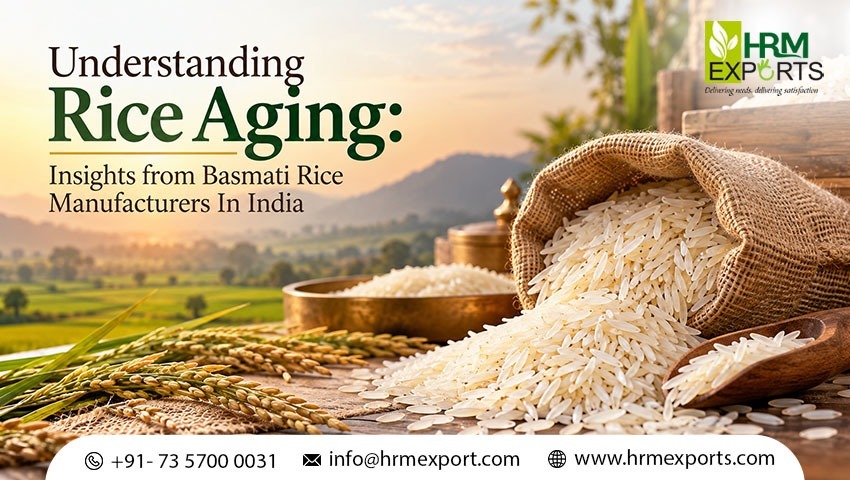
Understanding Rice Aging: Insights from Basmati Rice Manufacturers In India
When you cook a plate of long-grain Basmati, you expect fluffy grains that stay separate and smell amazing. Freshly harvested rice does not cook this way. Fresh paddy absorbs too much water, gets sticky, and breaks easily in the pot. Getting that non-sticky texture and maximum grain length requires a simple, controlled aging process. In this blog, experienced Basmati Rice Manufacturers In India shared how proper aging transforms raw grain, improves cooking results, and protects quality for global supply chains.
What Actually happy when rice ages?
The aging is natural maturing process. As time passes, air and temperatures slowly changes behavior of grain:
• Moisture Evaporates: Fresh paddy has additional moisture that makes cooked rice mushy. Storing it reduces moisture to safe level for balanced cooking, which is 12-13%.
• Starches Settle Down: Enzymes naturally transform the starch in the kernel. This will help to absorb the water slowly to prevent the grain from dripping some sticky starch into the cooking pot.
• Aroma Enhances: The natural compound responsible for the nutty aroma of true Indian Basmati rice is concentrated during the process of aging.
• Grains Become Sturdy: Grain's exterior becomes hard; kernels don't split easily under high heat or steam.
Better Elongation and Higher Plate Yield
For restaurants, catering companies and food brands, aged Basmati offers much better value. Aged grains swell up to two and a half times their original length when cooked, making dishes look generous and attractive.
Popular export options like 1121 Basmati rice and 1718 Basmati rice show big jump in quality after proper aging. Because the inner starch stays firm, aged grains hold their shape well even when kept warm in buffet trays or cooked in big commercial pots.
How Processing plants keep stored grain safe?
Aging rice requires careful monitoring. Safe storage requires good ventilation and sanitation to prevent insect, and fungal infestation of paddy:
• Raised Wooden Stacks: Sacks are stacked on wooden pallets from the ground to allow fresh air to circulate through the stack.
• Climate Control: By daily monitoring of the temperature and humidity in the storage rooms, dampness will not accumulate inside the stacks.
• Clean Pest Control: Safe, organic cleaners and cleaning practices ensure stored crops are protected without leaving behind unwanted residues.
• Batch Tracking: High quality control systems ensure that each lot of harvest is monitored, and recorded based on farm of origin, moisture content and date of harvest.
Natural Aging vs. Hydrothermal Steam Processing
Natural aging in large warehouses is the traditional choice, but modern steam processing gives buyers another fast, reliable option:
• Natural Storage Aging: Paddy rests in airy warehouses for 9 to 24 months. This traditional method brings out maximum aroma, soft separation and classic flavor.
• Steam and Sella Methods: Hydrothermal treatment—used for items like 1121 steam Basmati rice—pre-cooks internal starches using hot steam. This hardens the kernel against breakage, and gives non-sticky results without long storage waits.
Source Quality Aged Grain with HRM Exports
Getting maximum grain length, rich aroma, and perfect cooking results requires strict aging control. HRM Exports is one of the prominent basmati rice manufacturers in India and exports high-quality basmati that is carefully aged to meet with the international standards. Whether it's supplying high yielding 1121 Basmati rice, or providing custom private label packaging, HRM Exports guarantees quality, pure grains, and on-time delivery to the world. Connect with HRM Exports to get the best quality Basmati Rice to your business today.
FAQs
1. Why is aged Basmati better than fresh harvest rice?
Aged rice soaks up more water, cooks into longer separate grains and does not turn sticky like fresh rice.
2. How long do manufacturers age their rice stock?
Most export-grade Basmati rests in clean storage anywhere from 9 to 24 months depending on buyer specs.
3. What is ideal moisture level for exported rice?
Rice is exported at 12% to 13% moisture to ensure freshness, and avoid moulding in long sea voyages.
4. How is steam rice different from naturally aged rice?
Steam processing works by applying the steam, and heat to harden the grains, while natural aging is slow process that takes several months to develop aroma and fluffiness.
5. How can I test if the rice is properly aged?
Official lab test sheets are available for low moisture numbers and small cooking samples can be sent for grain length and grain texture measurement.
23 Sep, 2026
Indian Basmati Rice Supplie ...

Latest Posts