Blogs
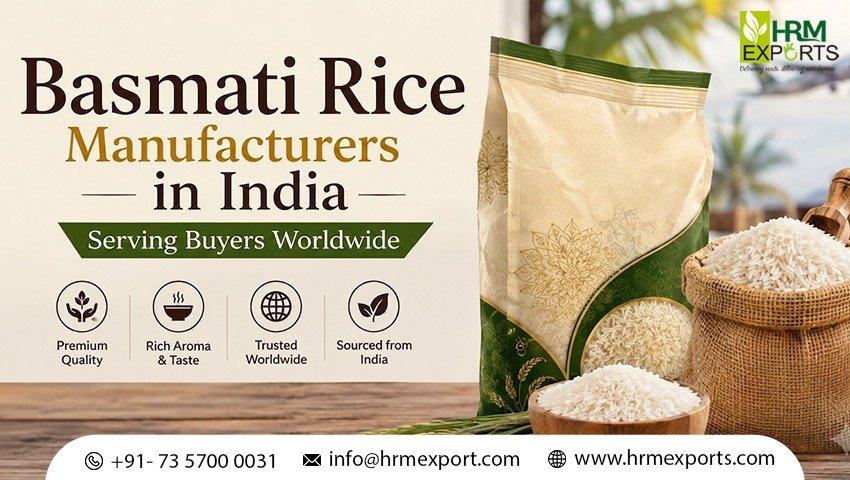
Basmati Rice Manufacturers in India Serving Buyers Worldwide
For centuries, Basmati rice has had a reputation as the King
of Fragrant Rice, a distinction it holds due to its slender grain, delicate
texture and distinct floral aroma. The Indian agriculture industry boasts of a
dedicated agro-processing ecosystem that helps connect traditional agriculture
with modern global food supply chains behind this global staple food. This blog
talks about the production, processing and distribution of high-quality Basmati
rice by Indian manufacturers to various international food markets and culinary
lovers.
Advanced Processing and quality assurance in Indian Basmati Mills
To produce high quality rice, a multi-stage manufacturing
process is essential to maintain the integrity of the rice grain, maximise
nutrient content and remove impurities.
The key milling and
processing stages.
- Pre-Cleaning and De-Stoning: Paddy
is cleaned after harvesting using the aspirator and the magnetic separator
to remove foreign matters like straw, dust and stones.
- De-husking and Paddy Separation: The
outer hulls are gently removed without affecting the delicate bran layer
and the endosperm using advanced rubber-roll hullers.
- Precision Whitening and Polishing: It
is used to buff the surface of the grain with a special abrasive to get
the surface clean and silky, white in color.
- Optical Sorting and Grading: Multi-chromatic
optical color sorters are able to pick out and sort out discolored,
chalky, or damaged grains with micro-millimeter precision.
- Controlled Aging: The grains are
stored in moisture-controlled silos for several months to lower the amount
of internal stickiness in the grain and enhance the natural aroma.
Popular Basmati Varieties Catered to Global Cuisines
Basmati varieties are cultivated in a wide range of
varieties and planted to meet the unique cooking requirements of different
regions and countries around the world, from the Middle East for feasts to the
western regions for gourmet meals. Of these, Traditional Basmati is notable for
its fine and tender mouthfeel, post cooking elongation and its natural aroma,
it is the best choice for authentic royal Biryanis, festive pilafs and fine
dining establishments. On the other hand 1121 Basmati Rice is world famous for
its really long raw grain length and its unimaginable growth on cooking that
creates amazing visual impact and yield for big-scale banquet catering and
Persian dishes.
Pusa Basmati and 1509 Basmati are some of the modern hybrid
varieties that are commonly used in commercial kitchens and households. The
1509 variety offers an economical yield, rapid cooking time and a mild
agreeable aroma, characteristic of the operating speed of food service chains
and institutional caterers. Pusa Basmati is a consistent grain for elongation,
with the classic aromatic characteristics, suitable for packaged lines for
consumer retail.
Global Supply Chain, Custom Packaging and Export Logistics
Indian basmati rice makers have well-developed logistics
networks for smooth trade and reliability on delivery schedules across five
continents.
Custom-made private
labeling and packaging.
Manufacturing plants provide custom packaging solutions to
meet a range of distributor and retail needs:
- Consumer Packs: Polypropylene, PET
jars and high barrier foil pouches (1kg, 2kg, 5kg) to ensure shelf
freshness.
- Bulk Commercial Sacks: Non woven
fabric, BOPP and multi ply jute bags (10 kg, 20 kg, 40 kg, 50 kg) designed
for wholesale distributors and food service operators.
- Atmospheric Modification: Flushing
with nitrogen and vacuum packaging – to preserve the aroma of the grain
and keep it free of insect infestation during prolonged sea
transportation.
FINAL THOUGHTS
From the traditional cultivation of basmati rice in the
Himalayan river valleys to the most modern rice milling machinery and hygienic
packing solutions, Indian basmati rice manufacturers have set India as the
undisputedly benchmark for all the global exports of aromatic rice in the
world. These manufacturers are well equipped to meet the commercial and retail
food requirements around the world by incorporating strict safety measures,
optical grading, and adaptable packaging options. Leaders such as HRM Exports
are still raising the bar to make sure that the international buyers are
getting true, safe and perfectly mature Basmati rice for tables around the
world.
FAQs
Why is 1121 Basmati rice popular worldwide?
It offers
extraordinary raw grain length and expands significantly during culinary
cooking preparation.
How does grain aging improve Basmati rice quality?
Aging reduces the
internal moisture, concentrates natural aroma, and prevents cooked grains from
sticking.
What is the difference between the Raw and Sella Basmati?
Sella rice is
parboiled inside its protective husk to retain the maximum nutritional value.
Why is Steam Basmati preferred by commercial caterers?
Steam processing
helps to set the grain structure and provides firm texture and non breaking
properties when cooking it in bulk.

06 Oct, 2026
Build Better Supply with 1121 Basmati Rice Exporters
29 Sep, 2026
Understanding Rice Aging: I ...
Latest Posts